WISE Organics Fertilizer and compost kit
Turning Agricultural Waste into Soil Health WISE Organics is a sustainable fertilizer initiative that converts agricultural waste into high-quality organic fertilizer pellets designed to improve soil health, enhance crop productivity, and reduce dependence on chemical fertilizers. Our approach integrates biochar technology, vermicompost enrichment, and circular agriculture principles to create a next-generation fertilizer for smallholder farmers. Nepal’s agriculture depends heavily on imported fertilizers, yet farmers frequently face shortages during critical planting seasons. At the same time, large quantities of agricultural residues such as rice husks, crop straw, and livestock manure are often burned or discarded, contributing to environmental pollution and wasting valuable nutrients.
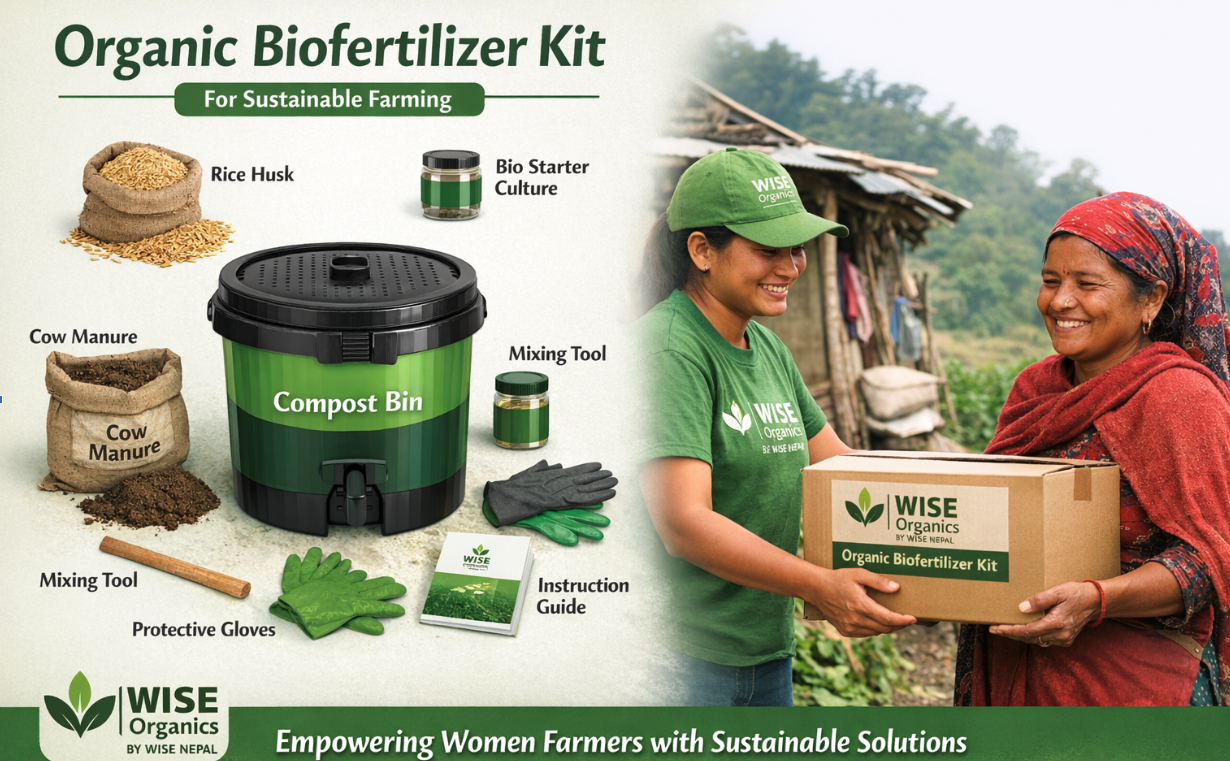
WISE Organics addresses these challenges by transforming agricultural residues into nutrient-rich fertilizer granules that restore soil fertility while reducing agricultural waste. We also train farmers on using the kitchen organic waste and making compost themselves and provide kit to female farmers too. So far, we have distributed millions of kits to rural women, enabling them to make local fertilizers themselves using waste and valorizing to high-value products like fertilizers for kitchen gardening.
Fertilizer Challenges Facing Nepal
Agriculture is the backbone of Nepal’s economy, supporting nearly two-thirds of the population and contributing significantly to national food security. However, Nepal faces persistent challenges in ensuring a stable and sustainable supply of fertilizers for farmers.
Nepal relies almost entirely on imported chemical fertilizers such as urea, diammonium phosphate (DAP), and potash. According to national agricultural data, Nepal’s annual fertilizer demand is estimated to reach around 800,000 metric tons, while only about 500,000 tons are imported, leaving a significant supply gap each year.
To meet farmer demand, the government allocates large financial resources for fertilizer imports. For example, the Government of Nepal allocated approximately NPR 28.82 billion to import about 550,000 metric tons of chemical fertilizers in recent fiscal years.
Despite these imports, farmers frequently face shortages during planting seasons. News reports have repeatedly highlighted that fertilizer supply problems occur every year, causing delays in crop planting and affecting agricultural productivity.
Nepal has spent more than NPR 113.9 billion on fertilizer imports over the last five years, illustrating the heavy dependence on external inputs.
Another major challenge is that Nepal currently does not produce chemical fertilizers domestically, meaning the country remains dependent on international markets and supply chains.
These challenges create serious difficulties for smallholder farmers, who often cannot access fertilizers at the right time or at affordable prices.
The Need for Sustainable Fertilizer Innovation
Beyond supply shortages, over-reliance on chemical fertilizers also creates long-term soil health challenges. Continuous use of chemical fertilizers without organic matter inputs can reduce soil microbial activity, decrease soil organic carbon, and degrade soil structure.
At the same time, Nepal generates large quantities of agricultural residues every year, including rice husks from milling, crop straw from rice and wheat harvesting, maize residues, and livestock manure. Much of this material is either burned or left unused, contributing to environmental pollution while wasting valuable nutrients.
WISE Organics aims to transform this challenge into an opportunity by converting agricultural waste into sustainable fertilizer products that improve soil health while reducing dependence on imported chemical fertilizers.
Our Innovation
WISE Organics fertilizers combine several natural technologies that work together to improve soil productivity and crop growth.
Rice Husk Biochar Technology
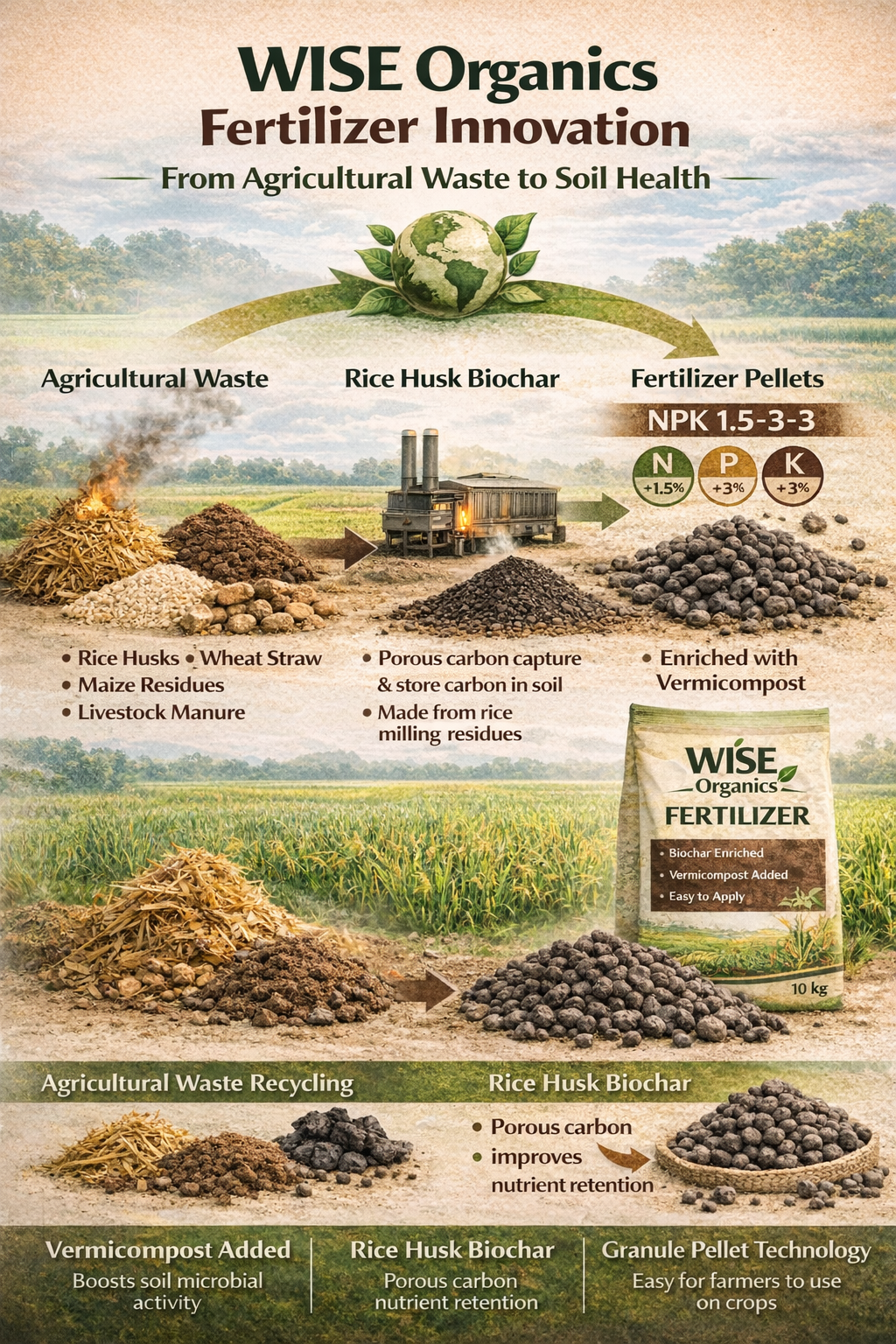
Rice husk biochar forms the foundation of our fertilizer. Rice husks, which are an abundant by-product of rice milling, are converted into biochar through a controlled heating process. Biochar is a porous carbon material that acts like a sponge in the soil. It helps retain nutrients, improves water holding capacity, and creates a habitat for beneficial soil microorganisms.
By incorporating biochar into fertilizer pellets, WISE Organics helps reduce nutrient loss from leaching and increases the efficiency of applied nutrients. This allows farmers to improve soil fertility while reducing the amount of chemical fertilizer required.
Vermicompost Enrichment
Our fertilizer pellets are enriched with vermicompost, a natural soil amendment produced by earthworms. Vermicompost contains beneficial microbes, plant growth hormones, and organic nutrients that enhance soil biological activity.
Adding vermicompost improves root development, supports microbial life in the soil, and promotes healthier crop growth. Unlike chemical fertilizers that provide nutrients alone, vermicompost helps restore the living ecosystem within the soil.
Circular Agricultural Waste Recycling
WISE Organics operates on a circular agriculture model that transforms waste into valuable agricultural inputs. Instead of burning crop residues or discarding agricultural waste, we collect and process materials such as rice husks, wheat straw, maize residues, and livestock manure.
These materials are converted into nutrient-rich fertilizer products, helping reduce pollution from crop residue burning while creating sustainable soil fertility solutions. This circular approach supports climate-smart agriculture and reduces the environmental footprint of farming systems.
Pellet Fertilizer Technology
WISE Organics fertilizers are produced in granule pellet form, similar to commercial fertilizers used by farmers. Pelletized fertilizers offer several advantages, including easier transportation, uniform nutrient distribution, and compatibility with standard fertilizer application equipment.
The pellet format also allows nutrients to be released more gradually in the soil, improving nutrient use efficiency and reducing losses. This ensures that crops receive nutrients over a longer period while minimizing environmental impacts.
Our Mission - Organic fertilizer
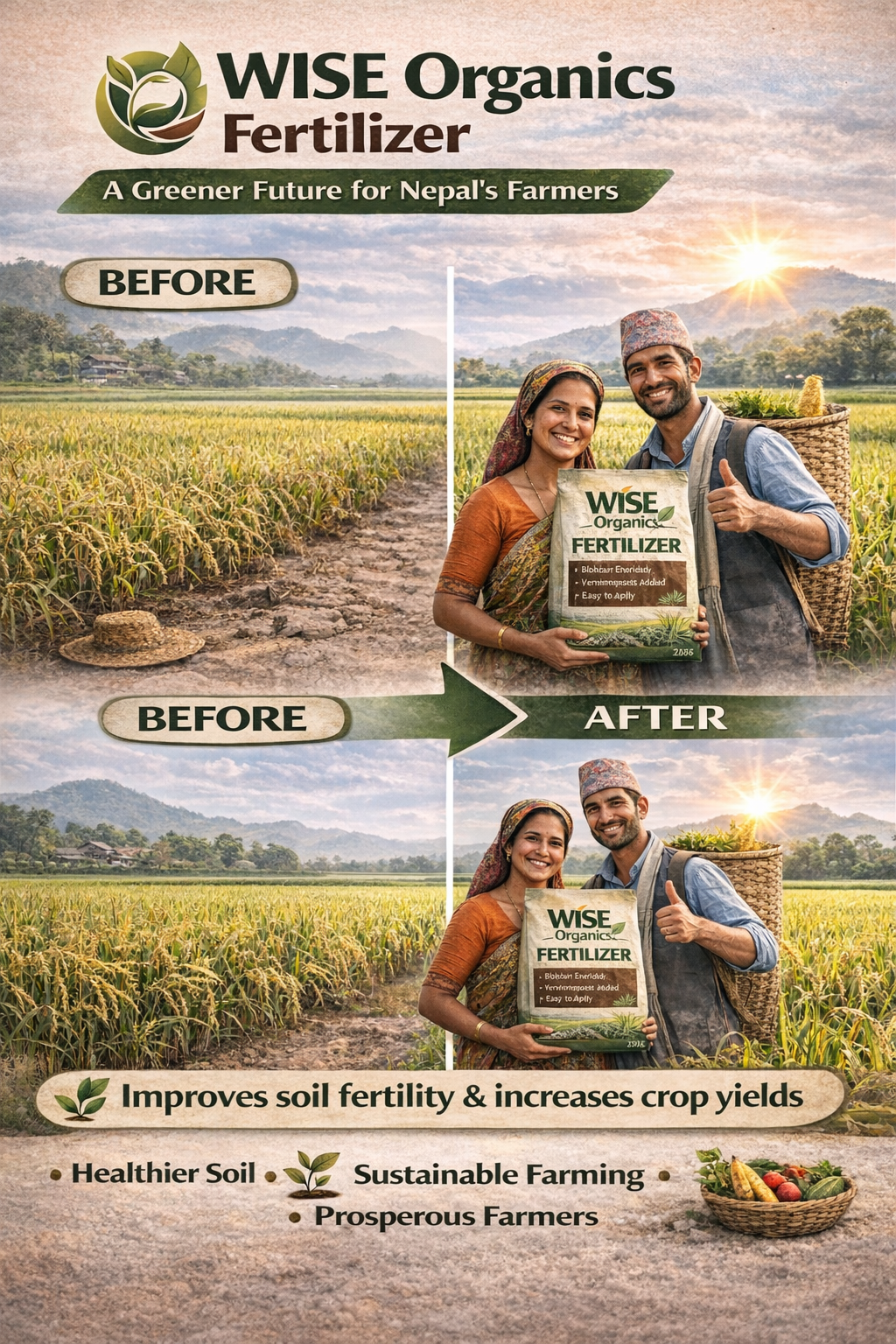
Our mission is to build a sustainable fertilizer ecosystem that empowers farmers, restores soil health, and reduces agricultural waste. Through innovative fertilizer technologies and circular agricultural systems, WISE Organics aims to create resilient farming systems that support both productivity and environmental sustainability.
We believe that the future of agriculture lies in transforming waste into resources and restoring the biological health of soils that sustain our food systems.
Target Goals for Nepal’s Farmers
WISE Organics aims to create meaningful and measurable impact for farmers, communities, and the environment across Nepal.
One of the primary goals of the initiative is to reduce Nepal’s dependence on imported chemical fertilizers. Nepal currently imports the majority of its fertilizer supply, which creates supply shortages during planting seasons and places financial pressure on the national economy. By producing locally manufactured fertilizers from agricultural residues, WISE Organics seeks to strengthen Nepal’s agricultural self-reliance.
Another key objective is to restore soil health. Years of intensive farming and heavy reliance on chemical fertilizers have led to declining soil organic matter in many agricultural regions. WISE Organics fertilizers improve soil structure, increase water retention, and stimulate beneficial microbial activity, helping rebuild healthy and productive soils.
The initiative also aims to reduce environmental pollution associated with agricultural waste burning. Crop residues such as rice straw and wheat straw are often burned after harvest, contributing to air pollution and greenhouse gas emissions. By converting these residues into fertilizer products, WISE Organics helps transform waste into a valuable agricultural resource.
In addition, WISE Organics seeks to support rural livelihoods and create green agricultural enterprises. The production and distribution of sustainable fertilizers can create new economic opportunities for farmers, cooperatives, and rural communities.
Over the long term, the vision of WISE Organics is to build a resilient agricultural system in which sustainable soil management, waste recycling, and farmer-centered innovation work together to improve food security and environmental sustainability.