Economic Impact
Lower Costs, Higher Farmer Income
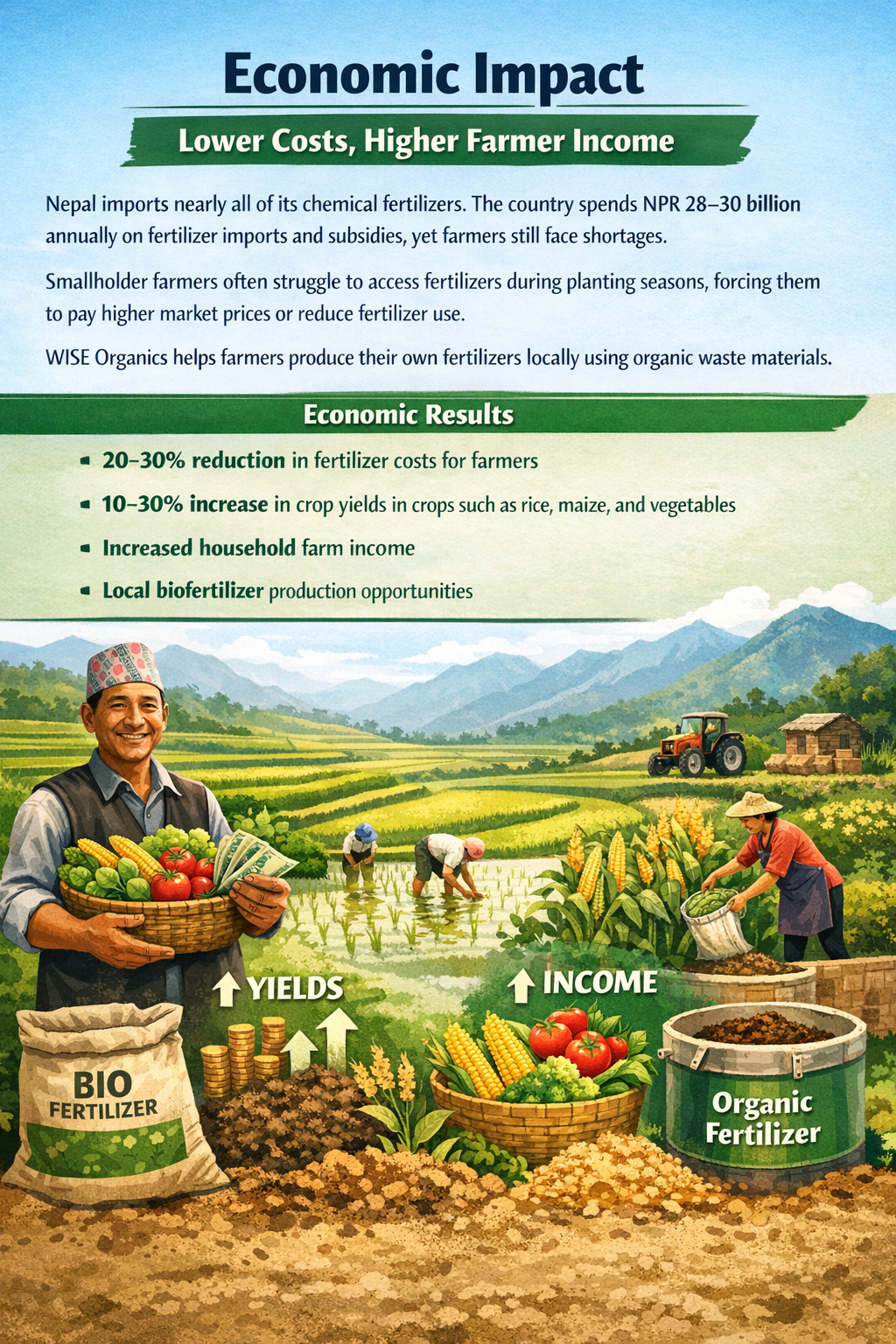
Nepal imports nearly all of its chemical fertilizers, spending NPR 28–30 billion annually on fertilizer imports and subsidies. Despite this large investment, farmers often face fertilizer shortages during planting seasons and are forced to buy fertilizers at higher market prices or reduce fertilizer use, leading to lower productivity.
WISE Organics helps farmers produce locally made organic fertilizers using agricultural waste such as rice husks, livestock manure, crop residues, and kitchen waste. This reduces dependence on imported fertilizers and keeps agricultural spending within local communities.
Economic Results
- 20–30% reduction in fertilizer costs for farmers
- 10–30% increase in crop yields (rice, maize, vegetables)
- Increase in household farm income by 15–25%
- Local biofertilizer production creates rural jobs and small enterprises
- Reduced spending on imported fertilizers at the national level
- Agricultural waste converted into marketable fertilizer products
Economic Impact at Community Level
Local biofertilizer production creates new rural business opportunities, especially for women and youth groups. Communities can produce and sell compost, biochar, and organic fertilizers locally, generating income while improving soil fertility.
This creates a circular rural economy, where:
- Waste becomes a resource
- Farmers reduce costs
- Local enterprises generate income
- Money stays within the community
“For every 1 ton of agricultural waste converted into biofertilizer, farmers can save fertilizer costs, improve soil health, and generate local income — turning a disposal problem into an economic opportunity.”
| Impact Area | Result |
| Fertilizer Cost | Reduced by 20-30% |
| Crop Yield | Increased by 10-30% |
| Farm Income | Increased by 15-25% |
| Chemicl Fertilizer Use | Reduced by 20-30% |
| Soil Organic Carbon | Increase by 15-25% |
| Waste burning | Reduces Significantly |
| Local Jobs | Increase Rural Enterpises |